Why Are Florida Pools Screened In? What It's Called and What It Costs
A plain-English guide for Florida homeowners and homebuyers: why pools get screened in, what the structure is called, how to get more privacy, and what it costs.
The Short Answer
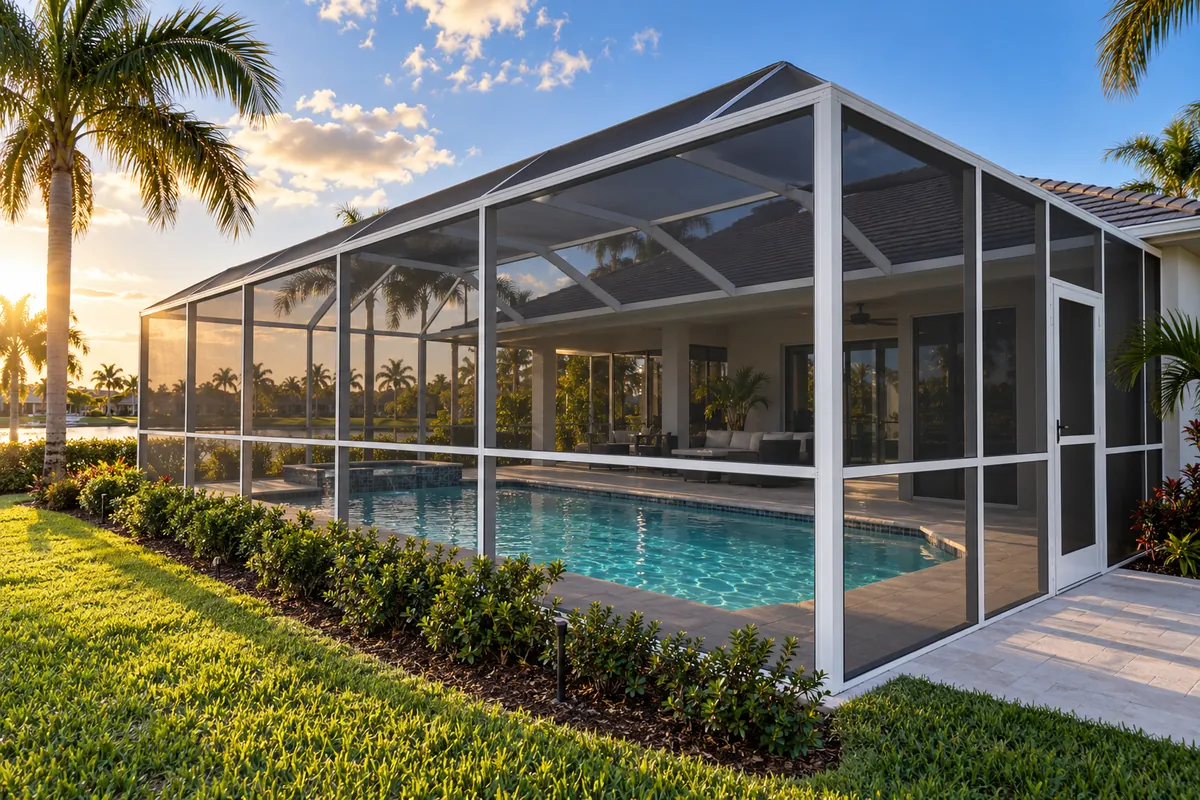
Florida pools are screened in to keep out insects, leaves and debris so the pool is usable all year. The screen also adds some shade, keeps pets and small children contained, and makes the pool easier to keep clean. In South Florida, where mosquitoes, afternoon storms and falling palm fronds are routine, a screen enclosure is closer to a standard feature than an upgrade.
Why Florida Homeowners Screen In Their Pools
Bugs. Mosquitoes, no-see-ums and flies are the biggest reason. Standard 18×14 mesh blocks most insects. Finer 20×20 or No-See-Um mesh also blocks the smallest biting midges (see our mesh comparison).
Debris. Leaves, palm fronds, flowers and seed pods end up in the pool, filter and skimmer baskets. An enclosure catches most of it, which cuts cleaning time and chemical use.
Sun and comfort. Standard mesh blocks a portion of the sun's heat and glare. Solar screen blocks more. Either way the deck is a little cooler and you are less exposed to UV while you swim or lounge.
Safety and pets. A lockable screen door keeps young children and pets out of the pool area. In many Florida cities a properly built enclosure can count toward the pool barrier requirement, but rules vary, so confirm with your city's building department.
Resale value. Buyers in Florida usually expect a screened pool. A well-kept enclosure is a plus. A sagging, faded or torn one is a negotiating point.
What Is It Called? Pool Cage, Lanai or Birdcage
The same structure goes by several names depending on who you ask:
- Pool cage: the most common term in Florida, and the one most people search for.
- Pool enclosure or screen enclosure: the generic, industry term.
- Lanai: strictly a covered patio. In Florida it is used for the screened area, with or without the pool.
- Birdcage: a nickname, mostly used by newcomers and snowbirds.
The structure is an aluminum frame with fiberglass mesh held in place by spline, a rubber cord pressed into a groove. That is why repairs are usually done panel by panel (see pool screen rescreening).
Pool Cage Screen Privacy Options
A common complaint is that a standard screen offers little privacy from neighbors, especially at night when lights are on. Common fixes:
- Solar or privacy screen. A denser mesh that blocks more sightline and sun. It usually adds roughly 25–40% to panel cost, and it reduces some airflow and view.
- Lower privacy panels. Solid or privacy-mesh panels on the lower section of the wall, with standard screen above.
- Landscaping. Hedges, tall grasses or palms placed outside the cage. Keep branches off the roof to avoid storm damage.
- Fence or wall. Often the most effective option, but it may need a permit and HOA approval.
If you live in an HOA, check approved screen colors and styles before you change anything.
What Does a Pool Screen Enclosure Cost?
Costs depend on the work and the size of the enclosure. These are typical Broward County ranges. Exact prices come from a measured, free estimate.
| Job | Typical Cost |
|---|---|
| Single panel repair | $35–$65 per panel |
| Storm damage partial rescreen | $300–$700 |
| Full rescreen, standard 400–600 sq ft | $900–$1,600 |
| Full rescreen, extra large 900–1,200 sq ft | $2,000–$2,800 |
| New enclosure, standard size | Commonly several thousand dollars up to $10,000+ |
A new enclosure costs far more than a rescreen because it includes the aluminum frame, engineering and permits. In Broward, new enclosures generally need a building permit and engineered plans. Treat new-build figures as a rough market range and ask for a written quote.
For more detail see the full pool screen repair cost guide, or try the pool screen cost calculator to get a range for your size and job.
Do Screened Pools Have Downsides?
Mainly maintenance. Screens fade and tear over 8–12 years (see how long an enclosure lasts), salt air oxidizes aluminum near the coast, and storms can damage panels or frames. Regular rinsing, trimming and early repairs keep costs down. Our seasonal maintenance checklist covers it.
Frequently Asked Questions
Are all Florida pools screened in?
No. Many pools, especially newer or higher-end ones, are open. But screened pools are common in South Florida and expected in many neighborhoods.
Can I add a screen enclosure to an existing pool?
Yes. A contractor measures the deck, designs a frame, pulls the permit and installs it. Cost and timing depend on size and your city's permitting.
Does a screen enclosure keep out all bugs?
It keeps out most. For the smallest biting insects, choose No-See-Um mesh. Torn panels and loose spline let insects in, so repairs matter.
Need a repair or rescreen?
Call 954-866-0924 or request a free estimate. Serving Pembroke Pines, Davie, Miramar, Cooper City, Weston, Hollywood, Plantation and Sunrise.